



Does Stress Cause Neck Pain?
Does stress cause neck pain? The short answer is no! At McCabe and Brady Physical Therapy, we like to say “contributes to” instead of “cause.” The casual way healthcare professionals throw around terms can lead to confusion and, worse still, ineffective treatment. Fortunately, our highly skilled McKenzie therapists know how to dig deep and find the root cause of your neck pain, and this information helps you find relief!
Let’s discuss Nicole, a 40-something-year-old working mother of three. Nicole was used to being very active, balancing her work schedule with getting her kids to all the various activities and school functions that come with being a mom nowadays.
Her neck pain first started as a crick in the neck when she woke up one morning. As the day progressed from driving her kids around to sitting at her desk, she noticed turning her head became more difficult and painful, making focusing on work nearly impossible.Nicole struggled to figure out why her neck started hurting and came to the conclusion that stress “must be” the culprit. The more pain and difficulty moving she had, the more convinced she was that stress was to blame.
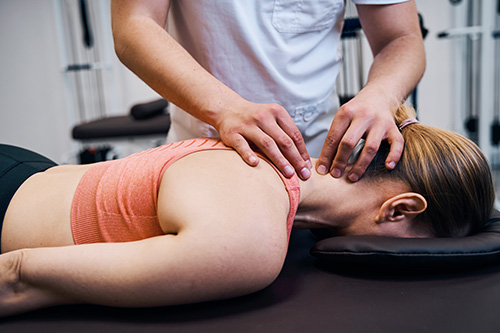
Understanding Nicole’s Neck Pain
One of the most common things we hear from our patients is that their pain started for “no apparent reason.” Like Nicole, people will wake up with a crick in their neck or notice a stiffness turning when driving in the car. It is also common for people to notice tightness in their upper back and neck after a long day.
So, what is actually the source of the pain? In most cases, there is an issue with the neck joints or the neck muscles due to prolonged positions. Our neck joints don’t like remaining in any position for extended periods. In Nicole’s case, she first noticed her pain in the morning, which may have been related to her neck position while sleeping. It is also important to note that in Nicole’s case, the first sign of any issue was in the morning when she woke up, unrelated to stress.
As Nicole’s day progressed, her pain got worse. But this also was more likely related to how she held her neck while driving or sitting at her computer. In both cases, her posture, specifically how she held her neck, seems to have contributed to her pain. Prolonged sitting can lead to a forward head position, resulting in tension to soft tissue (i.e., muscles, tendons, and ligaments) or negative changes to our blood flow.
The muscles of our neck function best when we move them. So, holding her head in one position likely led to irritation of the muscles and affected her ability to move her neck, which in turn caused stress.
When we are under stress, our body is in a state of “fight or flight” and releases excitatory chemicals of adrenaline and cortisol. These excitatory chemicals stimulate our nerves causing them to fire and send impulses to our nervous system. Over time, these nerve endings become more sensitive and over protective. As a result, these nerve endings will fire and send impulses during just normal movements and postures. Research studies have found that individuals with higher stress levels reported increased neck pain as compared to those with lower stress levels. This is why we say “contributes” to, but not the cause of, neck pain.
How Physical Therapy Can Help Alleviate Neck Pain
Our certified McKenzie therapists will target the source of your pain by performing a thorough examination, starting with your medical history and details about how, when, and where your symptoms began. As we saw with Nicole, determining how, when, and why the pain started helps us eliminate possibilities and get to the actual root cause(s).
Our therapists will also analyze your posture and movement to identify any limitations or restrictions contributing to your condition. We’ll use this information to design a program that addresses your specific needs.
Our treatment plans focus on relieving your pain and improving your posture, restoring mobility, strength, etc., educating you about managing your symptoms. Your program will likely include targeted stretches, repeated movement exercises, activity modification, and posture recommendations.
We’ll listen to your unique situation and specific issues and then work to help you find relief and get back to your normal routine.
Book Your Appointment Today!
If you’re dealing with neck pain or looking for someone to help you figure out what is causing your issues, call us today and set up a consultation!
Get Started with PT Now!
Return to McCabe and Brady Physical Therapy and Let’s Continue Your Journey to Wellness Together. Schedule Your Appointment Now!
Thanksgiving Recipe
Paleo Gluten Free Stuffing
Ingredients:
- 2 Tbsp olive oil, divided
- 1 small butternut squash, diced
- 2 cups Brussels sprouts, sliced
- 2 cloves garlic minced
- 1 medium-sized yellow onion, diced
- 3 celery stalks, finely chopped
- 1 red pepper, diced
- 1 apple, sliced and diced into small pieces
- 2 Tbsp finely chopped fresh sage
- 2 Tbsp finely chopped fresh rosemary (or 2 tsp dried)
- Salt & pepper to taste
Turkey Sausage:
- 1 lb Ground chicken or turkey
- 1 Tbsp fennel seeds
- 1 tsp paprika
- 1 tsp onion powder
- 1/2 tsp each salt and pepper
Directions:
Preheat the oven to 450°F. Mix together ingredients for turkey sausage in a large bowl. Add butternut squash and brussels sprouts to a baking sheet lined with parchment paper. Drizzle with olive oil and season with salt and pepper. Roast in the oven for 20 minutes, flipping halfway through. Heat 1 Tbsp olive oil in a large skillet over med-high heat. Add turkey sausage and break up with a slotted spoon, cooking about 5-7 minutes until just browned. Remove turkey from skillet and add in onions, celery, red pepper and apple, then drizzle with a tiny bit of olive oil and season with salt and pepper. Saute for about 7-8 minutes until veggies soften. Add turkey sausage back to skillet with other veggies. Add cooked squash and Brussels sprouts. Add that to the skillet along with rosemary and sage and saute another 2-3 minutes, stirring everything very well.
Follow Us on Social Media!

Follow the buttons below to find McCabe and Brady on your favorite social media sites and stay up to date with what happens around our clinic!
Thank you for subscribing
to McCabe and Brady Physical Therapy
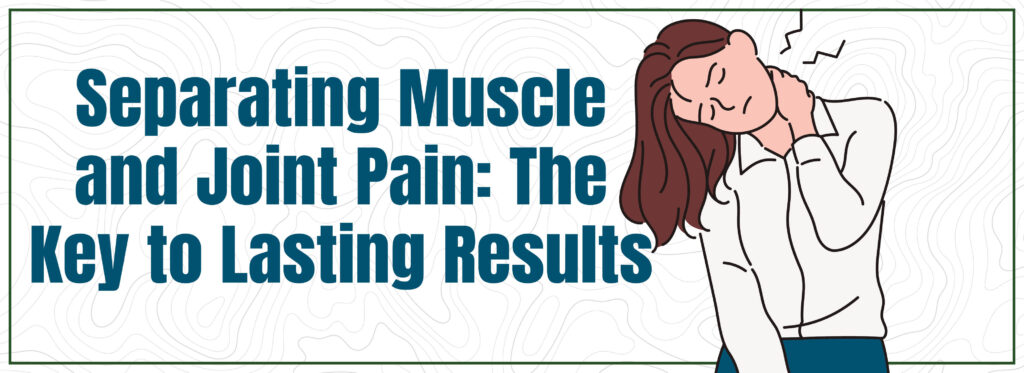
Do you notice tightness in your upper back and neck? Is it more tight on one side than that on the other? The location and characteristics of your neck pain are valuable clues for our skilled McKenzie trained therapists at McCabe and Brady Physical Therapy to identify the likely culprit for your pain, which helps us guide you to lasting relief.
Ready to unlock the secret to lasting relief from neck and upper back pain? Don’t ignore those subtle signs — reach out to our skilled physical therapists today, and let us help you resolve your pain once and for all!
Neck Pain — Muscle vs. Joint
It can be difficult for people to determine where their pain originates. One of the most common reasons people describe their pain is “no apparent reason.” It often seems to come out of the blue or while doing the same everyday things you usually do.
You can use these clues to point you in the right direction:
- Pain on one side = joint pain. Although this, and all other clues, is not 100% true, it is a good starting point. Muscle tension tends to be on both sides of the neck and equally distributed, whereas joint pain is typically one-sided.
- Difficulty or inability to turn = joint dysfunction. Muscle tension tends to make movement uncomfortable or to feel tight on the opposite side of where you’re turning towards (pain on the left when turning right). Joint dysfunction usually causes the inability to turn or the sensation of a blockage when turning to the same side as the pain (pain on the right when turning right).
- Pain that travels = joint. Muscles tend to feel tight and sore in the muscles themselves, compared to joint pain, which travels from the source of pain up into the head or down into the shoulder blade or upper shoulder area.
These clues can help us determine what is causing your pain, but the best way to get lasting relief is to schedule an appointment with one of our McKenzie therapists!
Our Patients Get Great Results
“Frank and staff are extremely professional and friendly and my therapy regimen resolved my issue. I was pretty depressed when I first started my therapy, but over the course of my treatment that depression turned into joy. I highly recommend McCabe and Brady.”
– Charles J.
Refer a Friend

If you’ve experienced the outstanding care at McCabe and Brady Physical Therapy, why not share it with your friends? Referring them means giving them access to personalized treatment that can make a real difference in their health and well-being. Help them find a trusted healthcare partner—refer a friend to McCabe and Brady Physical Therapy today!
Meet Our Team

Alexandra Prophet
DPT, Cert. MDT

Douglas Brady
DPT, JD, Cert. MDT, AIB-VRC

Frank McCabe
MPT, B.S. Ex. Phys., Cert. MDT

Lauren Suchanick
DPT, Cert. MDT, AIB-VRC

Richard Winters
PT, DPT, OCS, Dip. MDT

Steve Smeck
BS. Ex. Phys, DPT