
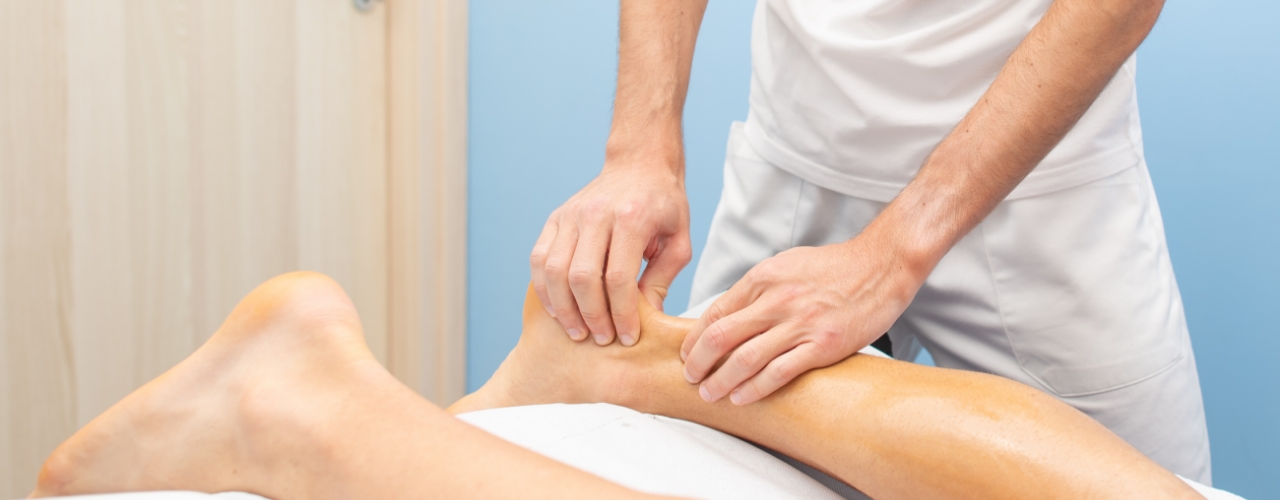
Physical Therapy Can Help You Resolve Achilles Tendinopathy
Do you experience soreness in your Achilles Tendon or heel in the morning or initiation of movement after prolonged rest? Do you notice pain in the back of your calf going downstairs or when you’re running? If so, you may be dealing with Achilles tendinopathy.
Injuries to the Achilles are among the most common running-related injuries for recreational and elite runners alike. Most people experience pain and stiffness that may start after running and interfere with athletic function and, eventually, basic daily activities. There are telltale signs that can alert you to a problem that needs to be addressed.
Achilles tendon function and risk factors for injury
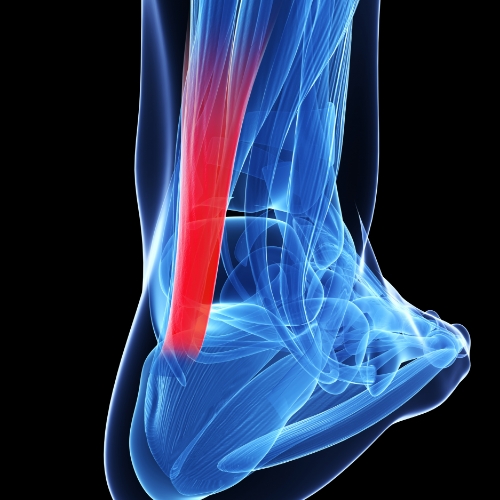
The Achilles tendon is the strongest tendon in the human body. This tendon starts around the middle of your calf and travels down to your heel (the calcaneus bone). It connects your calf muscles (gastrocnemius and soleus muscles) to the heel bone and withstanding large forces.
Studies have shown that the Achilles will absorb forces up to 6–8 times your body weight, which is close to the maximum load tolerable. With this amount of loading, it is obvious why it is so important to take proper care of it.
The repetitive micro-traumas associated with running are linked to inflammation of the tendon sheath, degeneration and micro-tearing of the tendon, or a combination of both. The Achilles tendon is susceptible to tensile overload due to the amount of force transmitted through this tendon when walking, jogging, going up stairs, and jumping.
The most common risk factors associated with Achilles tendonitis include:
- Repetitive stress of the tendon from running
- Obesity
- High blood pressure
- Type II Diabetes
- Prolonged steroid use
- Men (especially those over 40 years old)
- Age (specifically the elderly population)
Other factors include inappropriate footwear, specifically wearing a heel. If you wear a shoe with a heel for the majority of your day, over time, this position leads to your tendon being held in a shortened position resulting in tightness/restriction in the tendon. A restriction in the tendon combined with the extreme forces associated with running (i.e., 6-8 times your body weight) makes the tendon susceptible to injuries.
It is also possible to experience an acute injury due to a sudden overload like stepping in a hole or landing from a height like a ladder or high step.
What to expect during Achilles’ rehabilitation
Physical therapy should start immediately following the first sign of pain or injury to ensure the fastest recovery possible. Our experts in Warminster, New Britain and Elkins Park, PA will perform a comprehensive evaluation to understand more about the runner’s training schedule and plans, as well as their history of injuries.
It is crucial to address the entire system to ensure it is functioning properly. This includes an assessment of the running shoes and a biomechanical assessment of the lower extremities and spine.
We will progress your strength and dynamic stability exercises designed to restore function and prevent injuries.
Request an appointment today!
At McCabe and Brady Physical Therapy, our physical therapists have experience working with runners and getting them back to pain-free running.
Your Next Steps…
Request An Appointment
Receive A Custom Treatment Plan
Work Hard and Progress In Your Recovery
Enjoy Life Pain-Free!