

Joint mobilization is a type of manual therapy that uses the skilled application of force, direction, and technique to passive movement of specific joints to relieve pain and improve mobility.
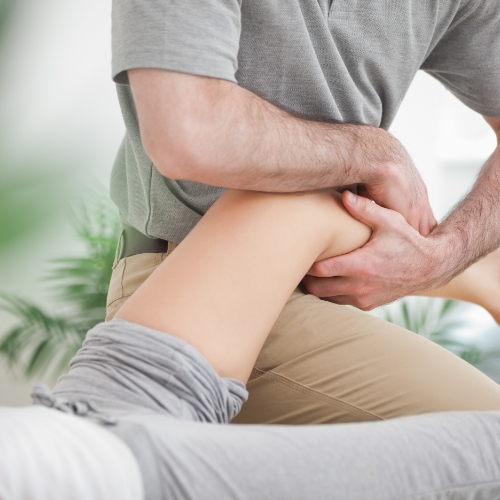
What will joint mobilization techniques look like?
Our therapist in Warminster, New Britain and Elkins Park, PA will need to be able to see or at least easily palpate (feel) the specific joint he or she is mobilizing, so it is important to wear comfortable and loose-fitting clothing. Our physical therapist will be sure to offer you clear details on what you should expect to feel, as well as what to do following your session to maximize effects and prevent recurring pain or dysfunction.
To complement and optimize the effects of joint mobilizations, we’ll also instruct you in additional services, which may include therapeutic exercises for strengthening and range of motion, modalities, and postural and neuromuscular retraining.
Will joint mobilization treat my condition?
Joints can become irritated, swollen, or misaligned due to injury, stress, poor posture, repetitive movement, age-related wear, and tear, or other factors. When this happens, the joint may not move correctly and can become stiff and painful. Nearby structures, including muscles, tendons, and ligaments, may become tense or injured as a compensatory effect of trying to support or stabilize the affected joint. This can lead to muscle weakness or even impingement and damage to nearby nerves.
Specific conditions that our physical therapy team successfully manages with joint mobilizations include:
- Whiplash
- Ankle sprains
- Rotator cuff tears and sprains
- Sciatica and other types of nerve impingement syndromes
- Arthritis (especially of the shoulder, spine, elbow, hip, and knee)
- Adhesive capsulitis (frozen shoulder)
- Medial or lateral epicondylitis (golfer’s or tennis elbow, respectively)
- Facet joint locking and other types of spinal misalignments
Joint issues are often the hidden underlying factors driving other types of injuries and ailments.
So, why should I consider this treatment?
You have hundreds of joints in your body, which come in a variety of types and sizes (such as a “hinge joint” in your elbow, a “ball and socket joint” in your hip, or a “saddle joint” in your thumb). Joints, formed by the articulating surfaces of two or more bones, depend on a combination of both stability and mobility to help you function efficiently and comfortably. Joints are supported by a variety of structures, including capsules, ligaments, tendons, cartilage, and muscle fibers, all of which can become injured and potentially benefit from joint mobilization.
The specific type, magnitude, speed, and frequency of joint mobilization performed depends on the goal of treatment, the type of joint being targeted, and even your unique anatomy. The benefits of joint mobilization include pain reduction, improved range of motion, and improved quality of joint movement (known as arthrokinematics).
Your Next Steps…
Request An Appointment
Receive A Custom Treatment Plan
Work Hard and Progress In Your Recovery
Enjoy Life Pain-Free!