



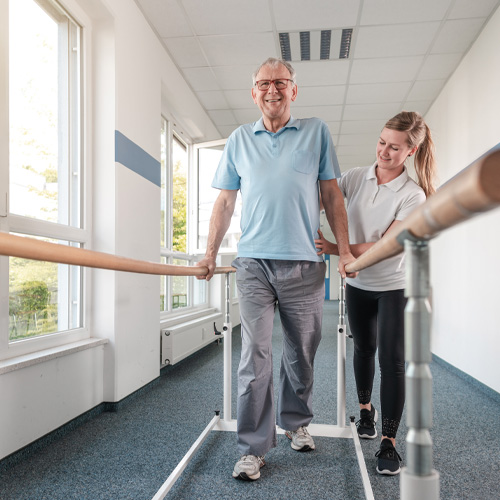
Five Simple Tips for Improving Your Balance
Avoid Falls and Stay on Your Feet, With a Little Help from Physical Therapy
Are you worried about falling and injuring yourself? Does limited mobility due to arthritis or another condition make you feel shaky? Balance challenges can certainly be difficult, but you do have options for improving your overall balance and stability!
One of the things we do at McCabe and Brady Physical Therapy is help people improve both static and dynamic balance by thoroughly examining performance and movement patterns during walking, standing, and transitional activities. Our therapists assess posture, gait, balance, mobility, and muscle strength as part of a comprehensive clinical risk assessment that helps pinpoint the contributors to instability.
Our approach differs from generic balance advice because we identify the underlying causes of imbalance, including weakness, sensory changes, vestibular issues, joint limitations, and fear of falling, then tailor treatment to your exact needs.
Want to learn more about the importance of good balance? Call to schedule an appointment today.
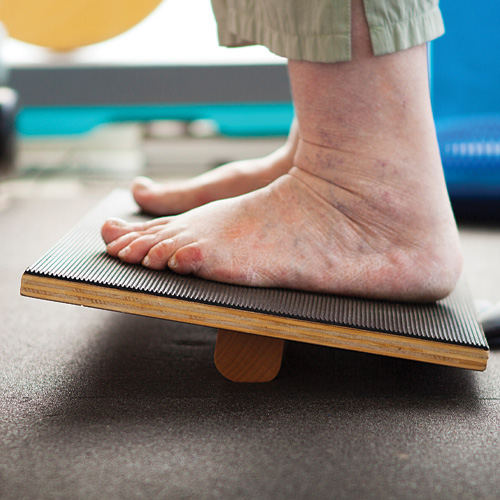
Why Should I Work on My Balance At All?
The older you get, the more important good balance becomes. Falls are one of the biggest threats to adults 65 years or older, causing millions of hospitalizations and emergency room visits every year.
While several factors contribute to this high fall risk–including age-related sensory and physical changes–you can do things to lessen your risk, and it’s never too early to get started. Balance deficits can result from physical conditions such as injuries, arthritis, neurological conditions, or inner ear dysfunction, many of which respond well to targeted physical therapy.
A good sense of balance has a radiating effect on your overall fitness, helping to improve your posture and overall movement. You’ll be better able to catch yourself if you stumble or trip, and you might notice improvements in other physical activities, like running or playing sports.
How Can I Improve My Balance? Five Suggestions from Our Physical Therapists
1. Go for a Walk:
Sometimes, the best solutions are the simplest. Walking helps build core and lower-body strength, two crucial components of good balance, and it’s safe and effective for most people. If you are experiencing frequent unsteadiness, a balance assessment can help determine whether you need targeted balance training or mobility support before increasing walking activity.
2. Restore Your Mobility:
Stiff or arthritic joints can negatively impact your balance. Our physical therapists can teach you how to restore or improve your mobility and guide you on a safe routine you can perform at home that targets your individual needs. Improved joint motion allows your balance system to respond more effectively to changes in position.
3. Target Your Core:
If you’re really struggling with balance and instability, it may be time to focus on dedicated core exercises. Your core refers to the muscles that wrap around your spine–your back, hip, glute, and ab muscles. Improving trunk and hip stability supports your ability to maintain balance and respond to unexpected movement.
4. Challenge Your Balance:
As with any other aspect of fitness, spending time on dedicated balance training can help you see results. Our clinicians progress balance exercises based on objective screening results and ongoing observation.
5. Assess Your Balance:
If you want to get serious about improving your balance, schedule an appointment at McCabe and Brady Physical Therapy to have your balance assessed by one of our experts. A comprehensive assessment may include static and dynamic balance testing, gait analysis, and a review of fall history to pinpoint why balance is impaired. With a balance assessment, we can help you target your treatment to suit your exact needs.
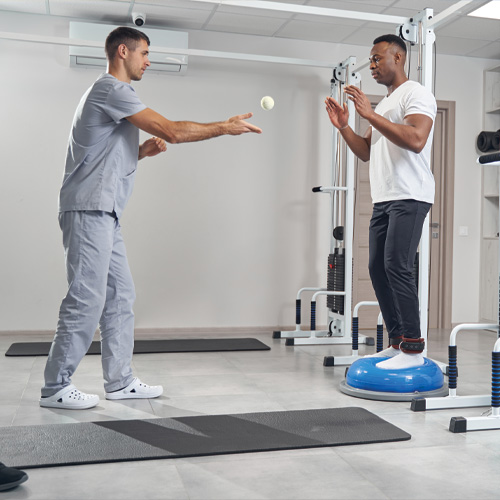
Afraid You’ll Lose Your Footing? We’ve Got Your Back
The McKenzie-trained physical therapists at McCabe and Brady Physical Therapy specialize in movement and exercise. We integrate balance training, coordination drills, strengthening exercises, and targeted mobility work into your plan of care to improve stability and confidence. Vestibular rehabilitation techniques are included when dizziness or inner ear involvement affects balance.
We’ll design a customized treatment program that addresses your needs and abilities. For example…
- Dealing with persistent pain that makes walking difficult? We can guide you through a drug-free pain management program.
- Find most core exercises impossible? You’re not alone. We select exercises that match your current ability and progress them safely as your balance improves.
- Not sure how to challenge your balance? We’ll guide you through a progress balance training program, measuring your progress and increasing intensity as you go.
Don’t miss out on the benefits of good balance. Call us to request your personalized balance assessment today and take the first step toward safer, more confident movement!
Get Started with PT Now!
Return to McCabe and Brady Physical Therapy and Let’s Continue Your Journey to Wellness Together. Schedule Your Appointment Now!
February Word Scramble
lotacehoc
eeanlnitv
bauefrry
iprdinehfs
iwentr
aceornm
Answer Key
chocolate
valentine
february
friendship
winter
romance

This Valentine’s Day Rose Latte recipe is a cozy, romantic drink that blends creamy comfort with delicate floral sweetness. It’s the perfect way to treat yourself—or someone you love—to a beautiful and relaxing moment.
Enjoy This Seasonal Healthy Recipe!
Valentine’s Day Rose Latte
- 2 1⁄2 cups Unsweetened Plant-Based Milk
- 1 tbsp + 1 tsp Maple Syrup
- 1 tsp Beet Powder
- 1 tsp Vanilla Extract
- 2 tsp Rose Water
Optional:
- 1⁄2 tsp Ground Cardamom
- 2 Espresso Shots
Add the unsweetened plant-based milk, maple syrup, beetroot powder, and cardamom (if using) to a small pot over low heat.
Heat on low for about 5 minutes or until warmed to your liking, stirring frequently. Then take off the heat and stir in the vanilla extract & rose water.
Pour the espresso shot into your mug (if using). If you have a milk frother, use it to froth the plant-based milk mixture (this is optional too).
Pour the rose milk latte into your mug and top with dried rose petals and an extra dash of cardamom if you like. Enjoy!
Exercise of the Month
ONE LEG BALANCE
Slowly lift your uninjured leg upward behind you so that your weight lies on the leg with the injured ankle. Hold this position for 20 to 30 seconds and gradually progress to more seconds as you get stronger.
2 Sets, 1 Rep. (Materials needed: chair)
Follow Us on Social Media!

Follow the buttons below to find McCabe and Brady on your favorite social media sites and stay up to date with what happens around our clinic!
Thank you for subscribing
to McCabe and Brady Physical Therapy
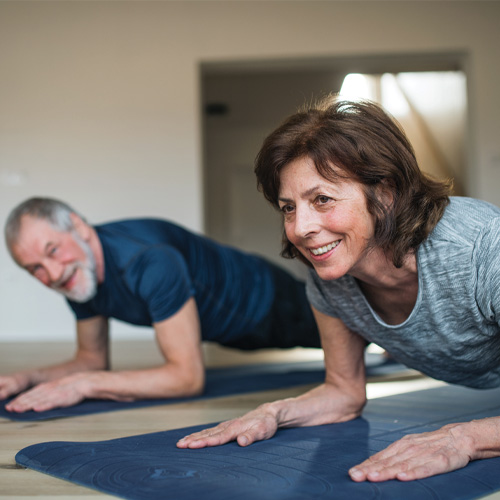
Help! Planking is Too Hard for Me!
If you’ve ever looked into strengthening your core, you’ve likely heard of planking. This deceptively difficult exercise involves holding your body in a straight line like a plank of wood. The most common version involves supporting yourself on your forearms and your toes.
It looks easy, but in reality, planking requires a tremendous amount of core strength while maintaining proper form, not letting your hips sag or rise too high. For many people, difficulty with planking is not a lack of effort, but a lack of foundational strength, coordination, or control. Sometimes, it’s nearly impossible to hold the position for 6 seconds, much less 60.
If that sounds familiar, don’t despair. Core strength develops progressively, and you can build it safely through plank variations.
If Planking is Too Hard, Try These Variations Instead
- Wall Plank: If a floor plank feels too intense, start upright. Face a wall, place your hands or forearms on it at shoulder height, and step your feet back slightly. Keep your body in a straight line from head to heel. Focus on engaging your core, without holding your breath. This is a great way to practice proper plank form without the full body weight load.
- Incline Plank: Once you’re comfortable at the wall, try an incline plank. Place your hands or forearms on a sturdy, elevated surface like a bench, step, or low table. Walk your feet back until your body forms a straight, diagonal line. Activate your core, keep your shoulders strong, and hold the position. The higher the surface, the easier it is, so adjust the incline as needed to match your strength level.
- Knees-Down Plank: Ready to get closer to the floor? From a full plank position, gently lower your knees to the ground while keeping a straight line from your head to your knees. Engage your core and glutes, and avoid letting your hips sag. This version helps build endurance and stability in a manageable way, and it’s a useful step before trying a full plank again.
If core exercises feel overwhelming or uncomfortable, one of our physical therapists can help determine which muscles need support and how to progress safely. At McCabe and Brady Physical Therapy, exercises are selected based on your movement quality and current ability, not a one size fits all approach.
Want more tips on improving your core strength? Make an appointment with one of our McKenzie-trained therapists today to learn which exercises are right for you and how to build strength with confidence!
Our Patients Get Great Results
“Very welcoming, friendly staff. Alex, Steve, and Will are the best!
I would recommend McCabe and Brady. They excel in professionalism and make PT fun as well!”
— Ann S.

Tips for A Heart-Healthy Valentine’s Day!
This year, don’t forget the most important Valentine of all: your heart! With February being the month of love and American Heart Month, here are a few tips to combine them into one fabulous celebration:
- Try a heart-healthy treat: Pomegranate seeds, good dark chocolate, and sweet strawberries are all delicious alternatives to candy hearts.
- Take a ballroom dance class with your sweetheart: Nothing’s more romantic than a sweeping waltz or sultry tango. But ballroom dancing is also a great cardio workout–making it the perfect date night for American Heart Month!
- Sink into a relaxing bubble bath: Stress contributes to cardiovascular disease, so this month, set aside time to rest and relax with a bubble bath. Dim the lights, burn a few candles, and settle down with your favorite romantic read.
Want more healthy heart tips this February–or any month of the year? Schedule an appointment with McCabe and Brady Physical Therapy today!
Refer a Friend

If you’ve experienced the outstanding care at McCabe and Brady Physical Therapy, why not share it with your friends? Referring them means giving them access to personalized treatment that can make a real difference in their health and well-being. Help them find a trusted healthcare partner—refer a friend to McCabe and Brady Physical Therapy today!
Meet Our Team

Alexandra Prophet
DPT, Cert. MDT

Douglas Brady
DPT, JD, Cert. MDT, AIB-VRC

Frank McCabe
MPT, B.S. Ex. Phys., Cert. MDT

Lauren Suchanick
DPT, Cert. MDT, AIB-VRC

Richard Winters
PT, DPT, OCS, Dip. MDT

Steve Smeck
BS. Ex. Phys, DPT